Dublin Bay 21

Dublin bay 21 foot jack yard topsail gaff cutterHere’s a very nice boat from the board of Alfred Mylne. Designed as a one design class in 1903 for racing on the often windy and rough Dublin Bay, these boats were actively raced until the mid 1980s. Unfortunately since then, the entire fleet has been laid up in a field in Wicklow. All is not lost as a newly built version of one of these boats would make beautiful and practical racer or dayboat today.

LOA 32 ft 6 in
LWL 21 ft
Beam 7 ft 6 in
Draft 4 ft 7 in
Sail Area 630 sq ft

With their high peaked gaff, jack yarded topsail and double headsail the rig has plenty of variations to suit the conditions. As you can see she has plenty of sail area for her size, which would give excellent light weather ability as they were designed without engines. What no engines? Yes, it’s a real sailing boat but if you really absolutely have to have one a diesel electric system could be designed and installed. You might be better served getting an easily approached mooring or marina berth however.

Dublinbay21e

The Dublin Bay 21 has simple accommodations below and her spacious cockpit is perfect for entertaining friends or family. They also sport a short bowsprit which are great at deterring the opposition from crossing too close in front.

Dublinbay21f

If you would like to have your own piece of yachting history built why not contact Tiernan Roe, about having your own boat built, by phoning +353 (0)28 38973 or e-mailing roeboats@ymail.com

Roeboats, Ballydehob, Co. Cork, t:+353 (0)28 38973 m: +353 (0)86 158 69 37 e:roeboats@ymail.com
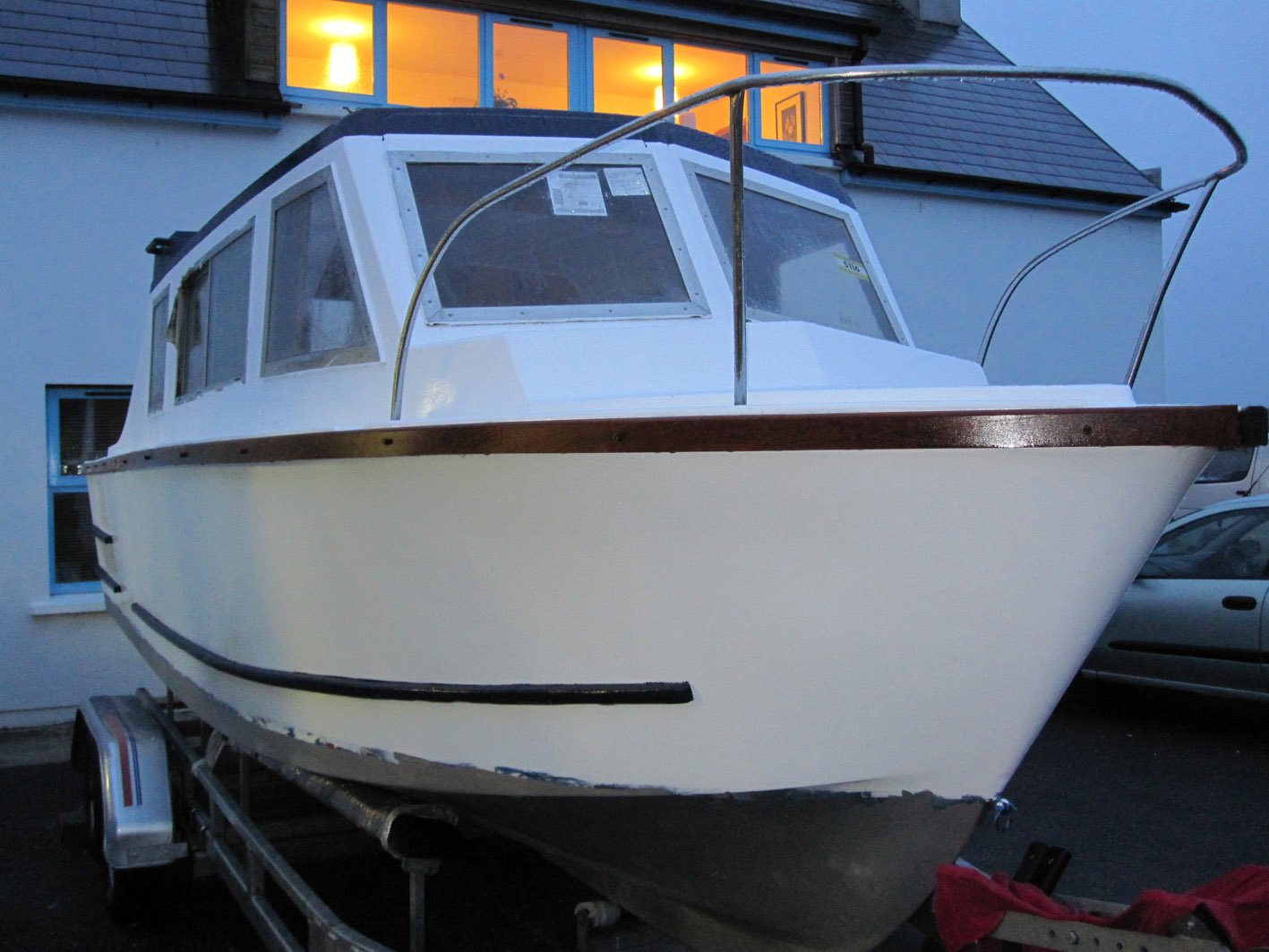
Cruiser Restoration closer to finish.

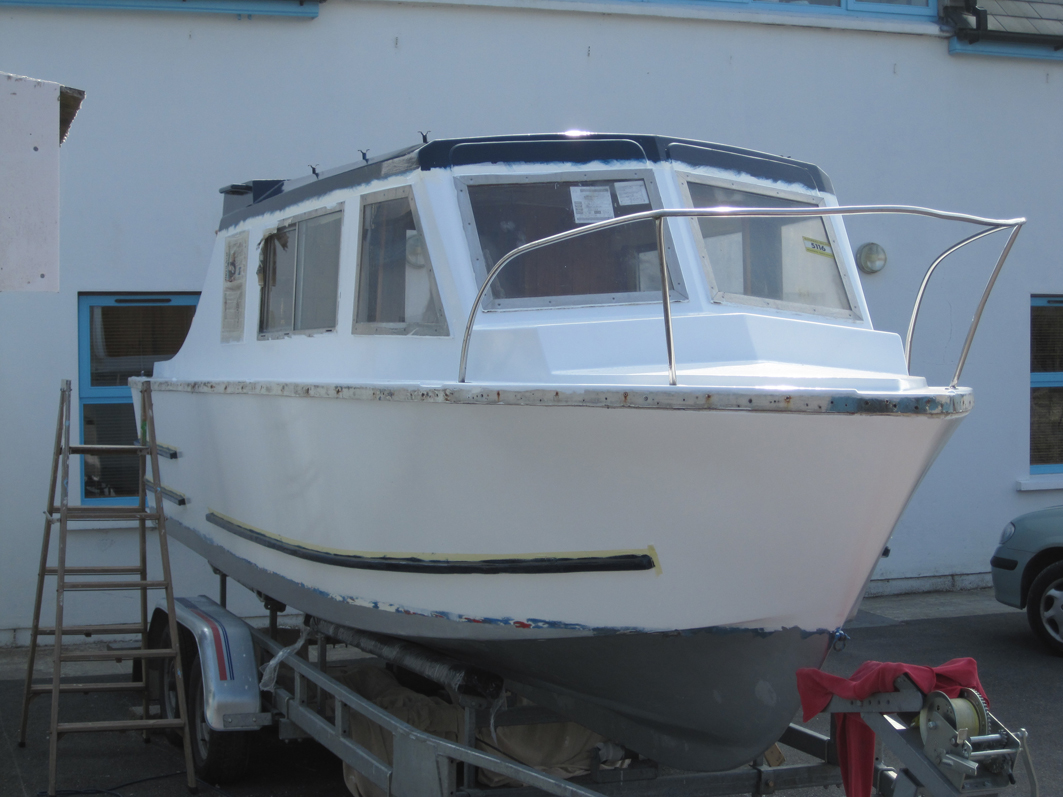
Well progress continues on the restoration of a river cruiser that’s in the yard at the moment. Most of the progress is not very visible but you will notice that the boat now has a rubrail. This needed a little bit of jiggery pokery to get it to wrap around the bulbous bow but it should look good once I shape the laminations to the final form. I’ve to trim the plugs and do some paint touch-ups. I can always know that I’m close to the end of a project when the list of things to do perversely starts getting longer and longer.

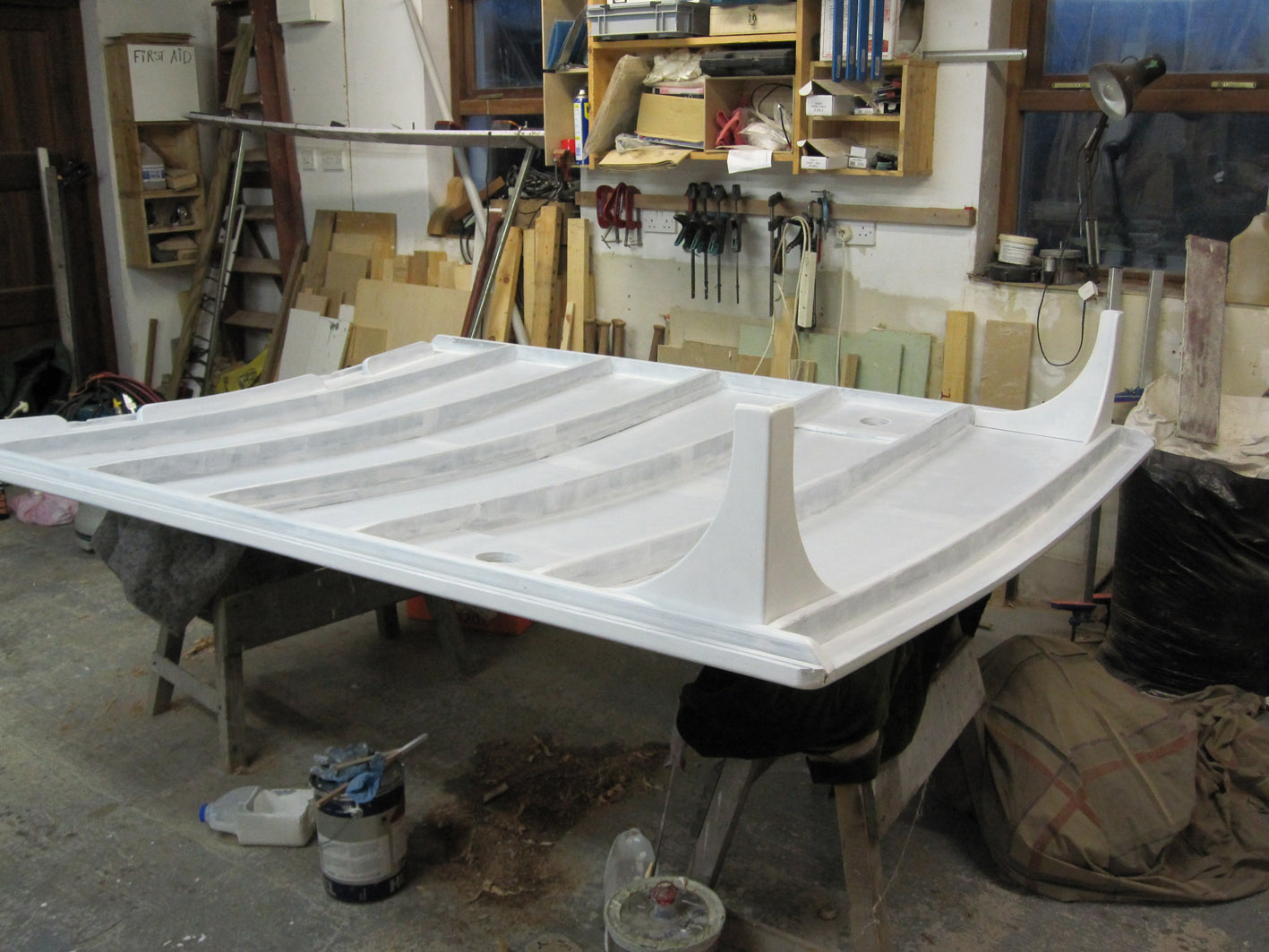
Yes I took the photo in the dark and rain so apologies for the quality. The picture below is of the canopy that will eventually cover the cockpit it’s just had its first coat of undercoat so it’s not looking great.

Please excuse the messy workshop it’s another indicator of a project coming to and end. The bigger the mess the closer the end. Anyway if you are interested in having your own boat restored, built or repaired why not contact Tiernan Roe, by phoning +353 (0)28 38973 or e-mailing roeboats@ymail.com

Roeboats, Ballydehob, Co. Cork, t:+353 (0)28 38973 m: +353 (0)86 158 69 37 e:roeboats@ymail.com
Progress on Cruiser restoration.

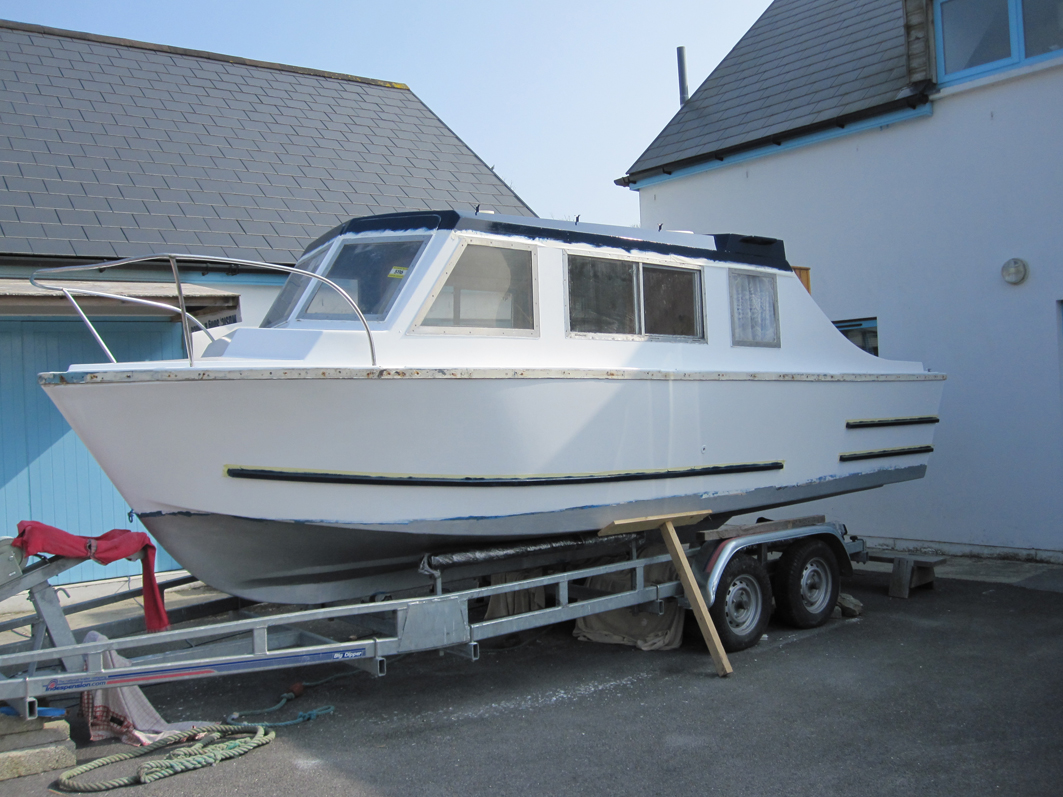
Painting finished on 21ft cruiser restorationHere’s how progress is going on the restoration of this 21ft river cruiser. As you can see she has come a long way from when she arrived. I’ve had to practically sand her right back to the gelcoat to get the crappy paint job off. Unbelievably when she was first painted whoever did it didn’t even bother to give the boat a wash. There were black streaks of tar or something under the paint. What is more amazing is that the paint hd stayed on so long. I did a bit of tidying up on the surface of the hull bottom there were a few bits of filler that needed smoothing and as you can see I then primed the bottom ready for the new antifoul.

Painting finished on 21ft river cruiser restorationWork is ongoing on the new canopy and I should have pictures of that next week. If you would like to discuss having your own boat restored why not contact Tiernan Roe, by phoning +353 (0)28 38973 or e-mailing roeboats@ymail.com

Roeboats, Ballydehob, Co. Cork, t:+353 (0)28 38973 m: +353 (0)86 158 69 37 e:roeboats@ymail.com
3D view of the boat when restored.

Here’s a 3D sketch of what the boat will look like when I’ve finished restoring her. I’ll be adding a canopy over the cockpit that will be made from some light and strong Western Red Cedar and marine ply.

3D view of restored boatThe canopy will then be fitted with canvas sides that can be rolled up when the weather is fine. It’s not a very detailed sketch but it gives you an idea of how the finished project will look. Anyway I’ve finished the first batch of sanding and I’m undercoating at the moment so I’m making the most of the fine weather we’re having here at the moment.

Roeboats, Ballydehob, Co. Cork, t:+353 (0)28 38973 m: +353 (0)86 158 69 37 e:roeboats@ymail.com
Way Hey! Spring is coming

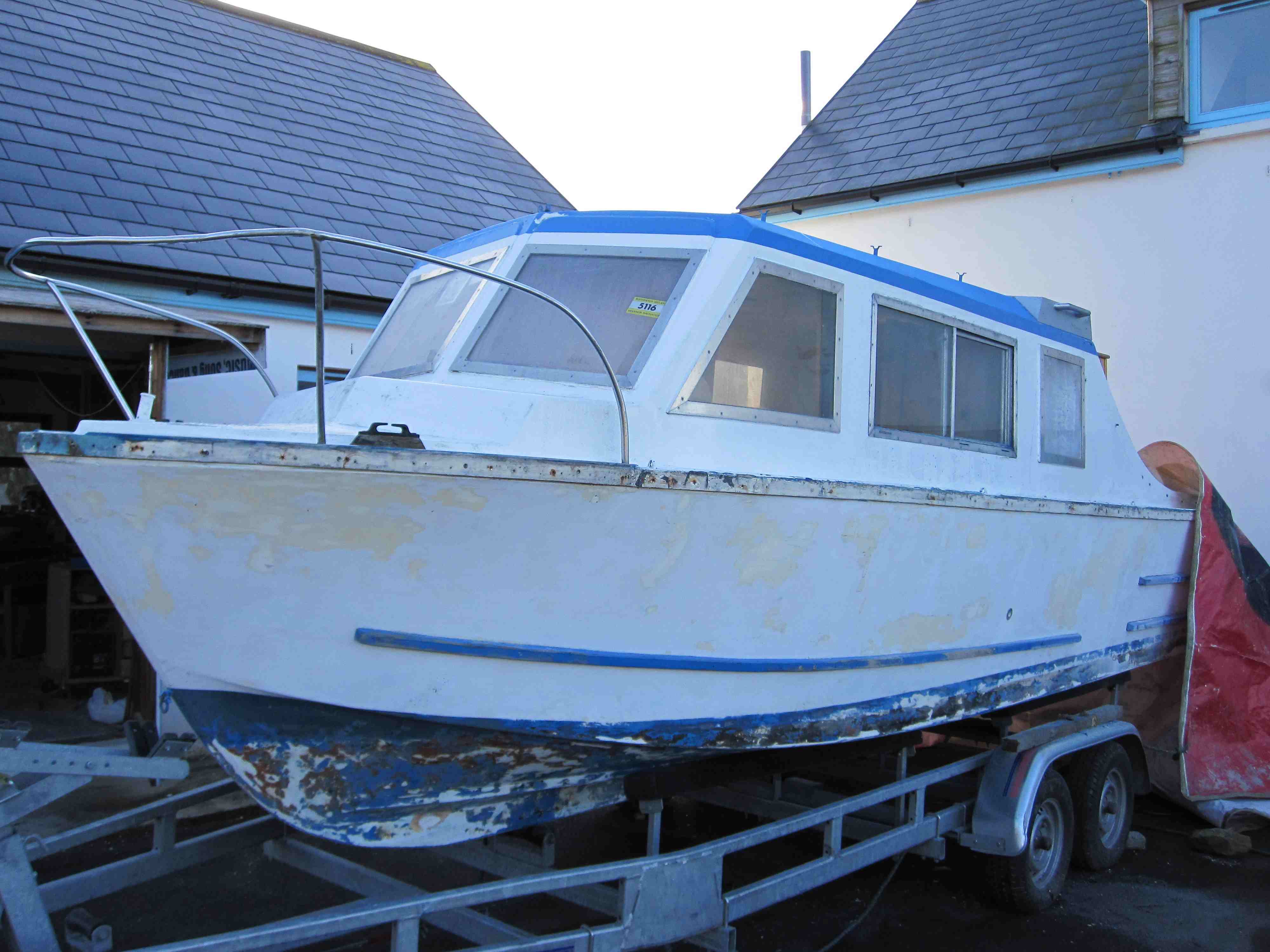
Goodness March is certainly coming in like a lamb this year. A whole week of dry weather forecast. Perfect timing for my current project the restoration of a small cabin cruiser for the Irish inland waterways. She was bit tatty when she arrived in the yard a little bit of an ugly duckling. But her metamorphosis has begun and while it could be said that she’s lost some of her cute fluffy feathers she’s now very much like the signet that she is. Feathers out of place and your not really sure what colour she is.cabin cruiser sanded down and ready for paint.

I’m concentrating on the exterior at the moment but I’ve already re-enforced the cabin roof by bonding the exterior skin and interior t+g panelling with polyurethane foam. It really has stiffened up the once trampoline like deck. Now after stripping the deck right back to the original fiberglass I’m going to epoxy on some glass cloth to give a non-slip finish and hopefully get rid of the crazing caused by the deck cracking when it was flexible.

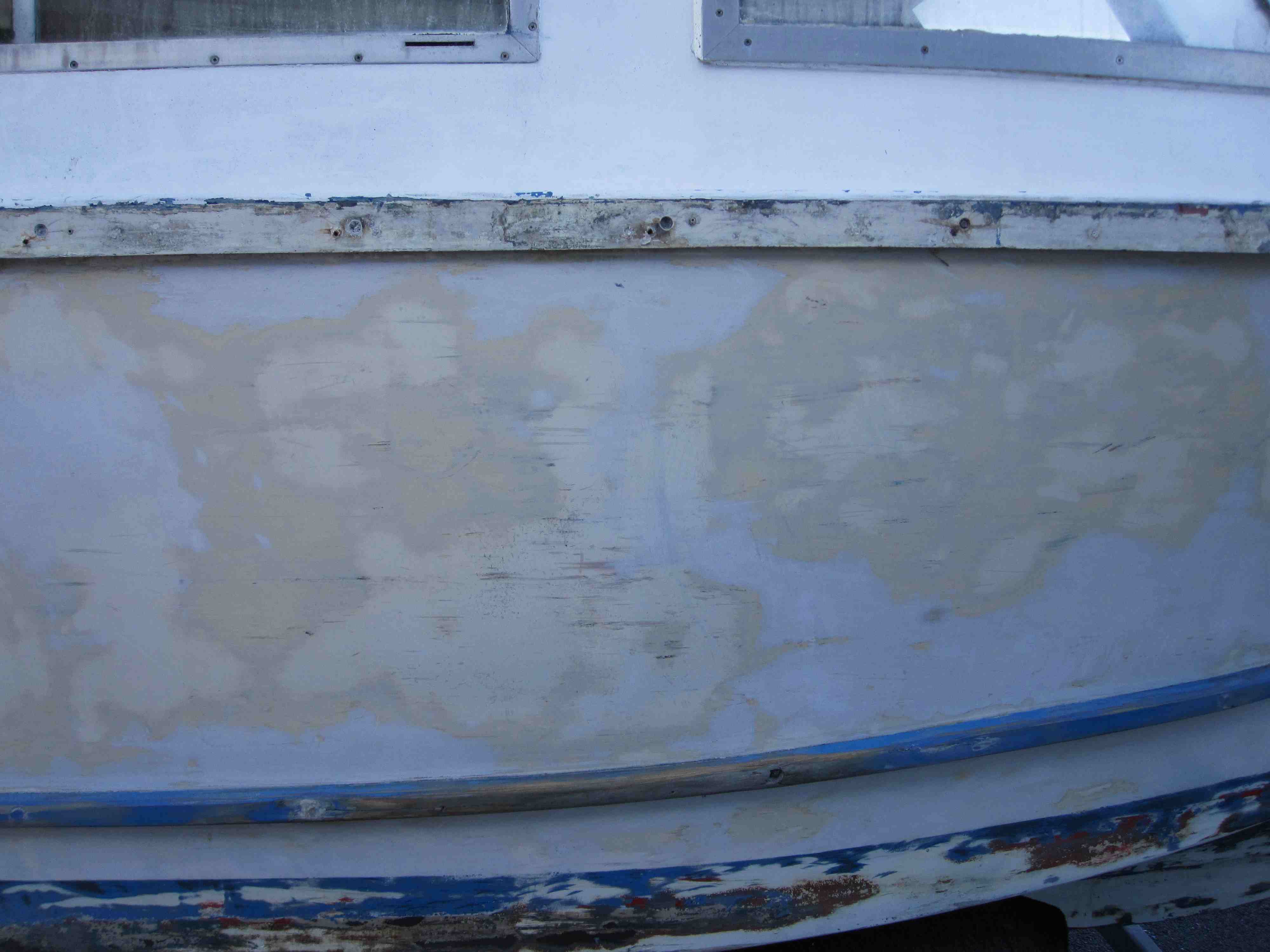
You can see in the photo above that whoever painted the boat previously didn’t even clean before painting. Oh well back to the sanding and more sanding before I even think about paint at least the Sun is shining. Pity it’s nasty nasty Fiberglass I’m sanding and not a lovely piece of sustainable ash or oak.

There once was an Ugly Duckling!

Holy moley look at what has pitched up in the yard. As unpretentious as it looks this boat is set for quite a voyage. The owner is hoping to spend the next few years circumnavigating the inland waterways of Ireland. That’s quite a bit of water. It also places a restriction on the overall height of the boat so the challenge is to build a canopy over the cockpit that gives enough headroom and sufficient forward vision. It also has to improve the look of the boat. Not an easy task but watch this space as l be keeping you updated on progress.

Boat ready for repair, restoration at Roeboats, Co. Cork, IrelandWhy not contact Tiernan Roe, about having your own boat repaired, restored or just have some work done that will improve your enjoyment of your boat by phoning +353 (0)28 38973 or e-mailing roeboats@ymail.com Or why not get a beautiful boat custom built. Roeboats build beautiful boats at surprisingly competitive prices.

Roeboats, Ballydehob, Co. Cork, t:+353 (0)28 38973 m: +353 (0)86 158 69 37 e:roeboats@ymail.com

Strandbarmen Faerings.

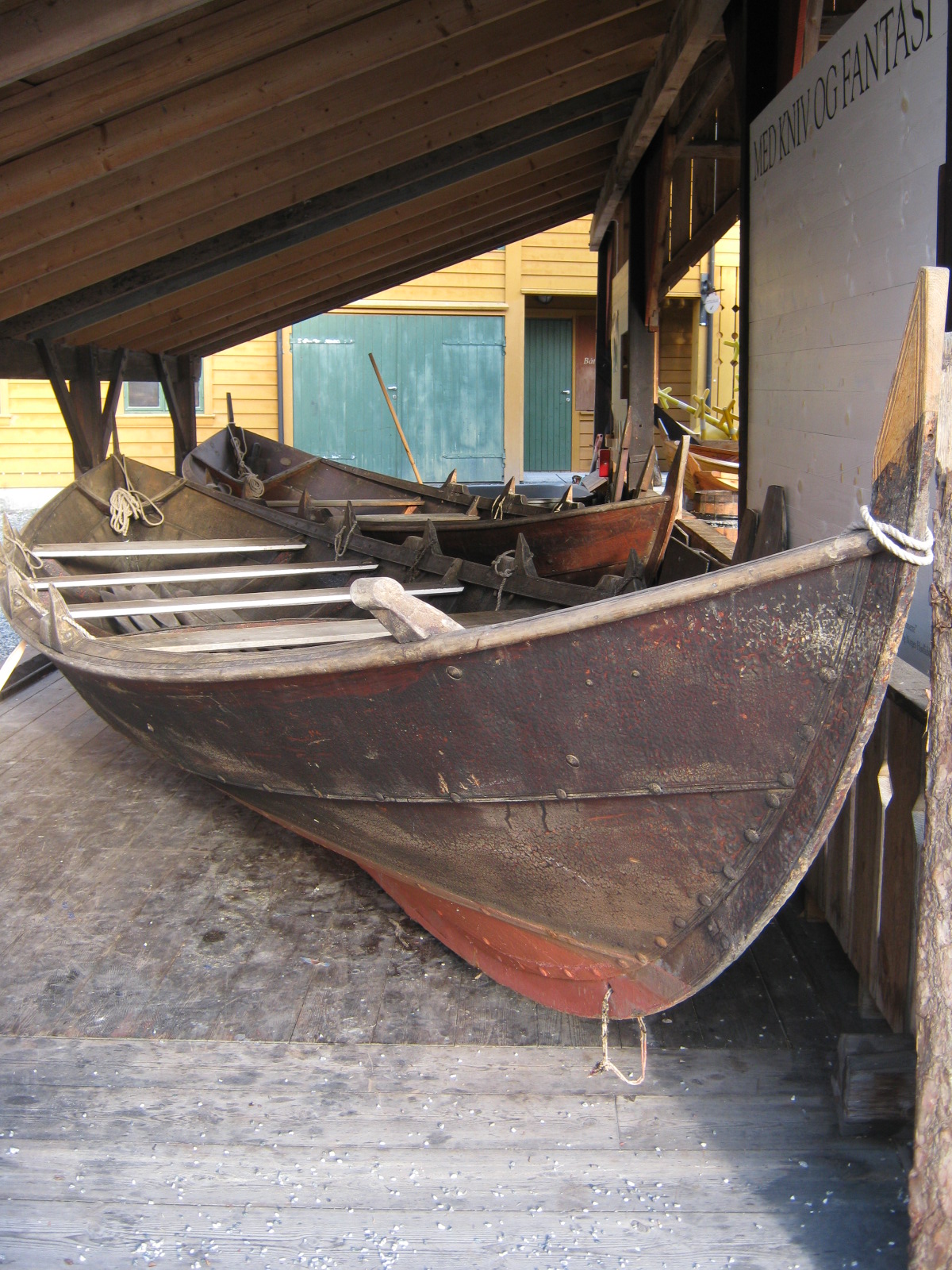
Here are a few more photos from my trip to Norway. They are of some typical Hardanger or Strandbarmen Faerings that were built at the Hardanger Fartøyvern Centre. Faerings are four oared boats and the Hardanger area was famous throughout Norway for the quality of its boats.
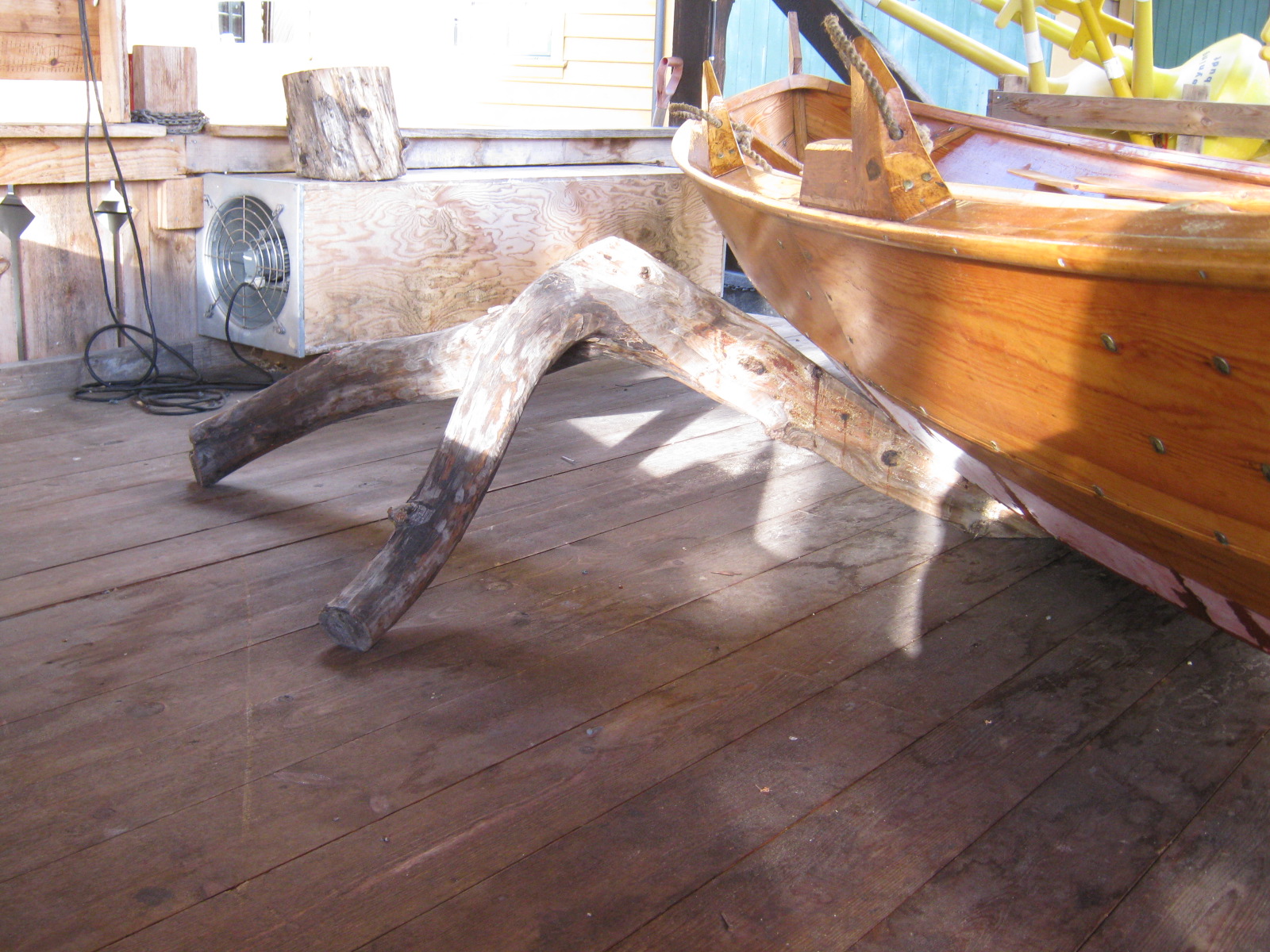
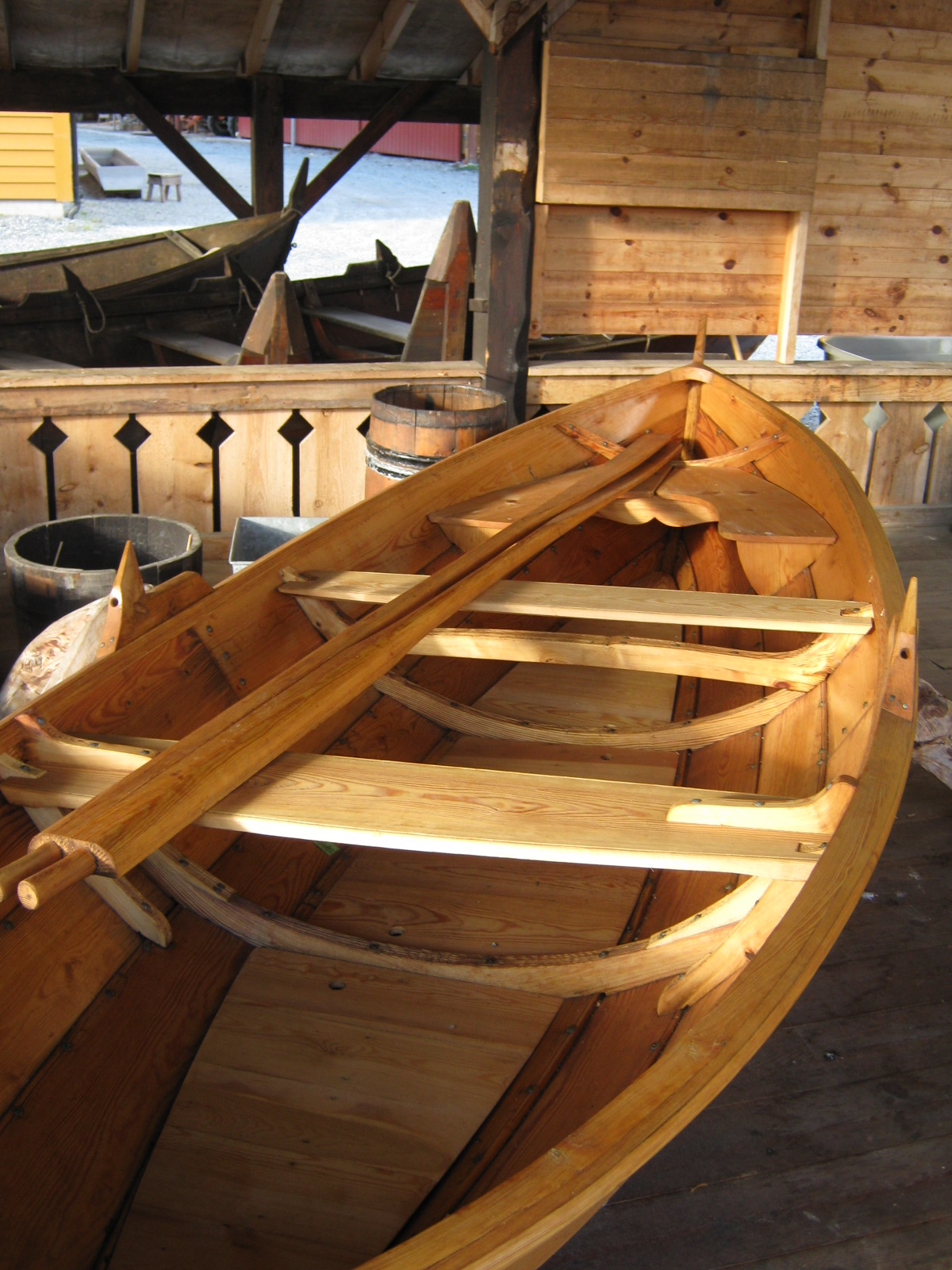
two new faerings.You can see above and in a close up below how the boats are supported on dry land. A three pronged piece of a tree is trimmed to create a tripod with one longer arm which is slid under the boat.Boat support made from three branched tree pieceBelow is a good view of the framing and thwarts of a Faering. As you can see there is a framing member below the thwart. The thwart is then removable for when more space is needed in the boat. You can also see the small stern frame called a rong, this frame is canted, that is, it’s not vertical. It’s easier to fit this way. Previously the inwales would have stopped here making the boat very flexible which was the way buyers would test a boat before buying. If it was too stiff it would be rejected as it wouldn’t ride the waves well.Frames of FaeringThe next boat is an Otring or eight oared boat. You can see in this one that the rong or forward frame is extended above the gunwale for use as a tie off point. You can also see in the stern that the inwale doesn’t extend all the way to the sternpost. Eight oar boatWhy not contact Tiernan Roe, about having your own boat built, by phoning +353 (0)28 38973 or e-mailing roeboats@ymail.com

Roeboats, Ballydehob, Co. Cork, t:+353 (0)28 38973 m: +353 (0)86 158 69 37 e:roeboats@ymail.com
Hooray! Photos from my trip to Norway.

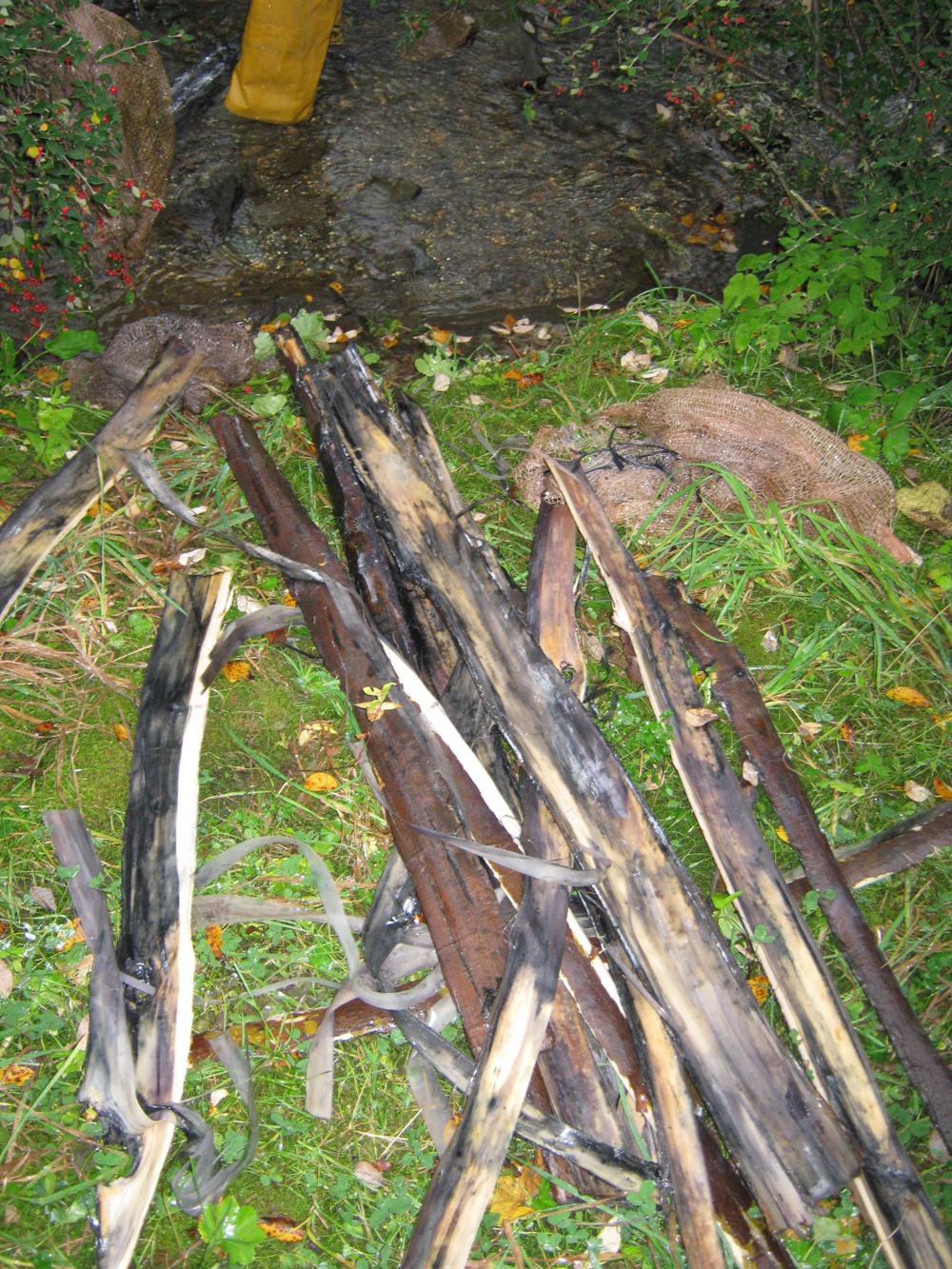
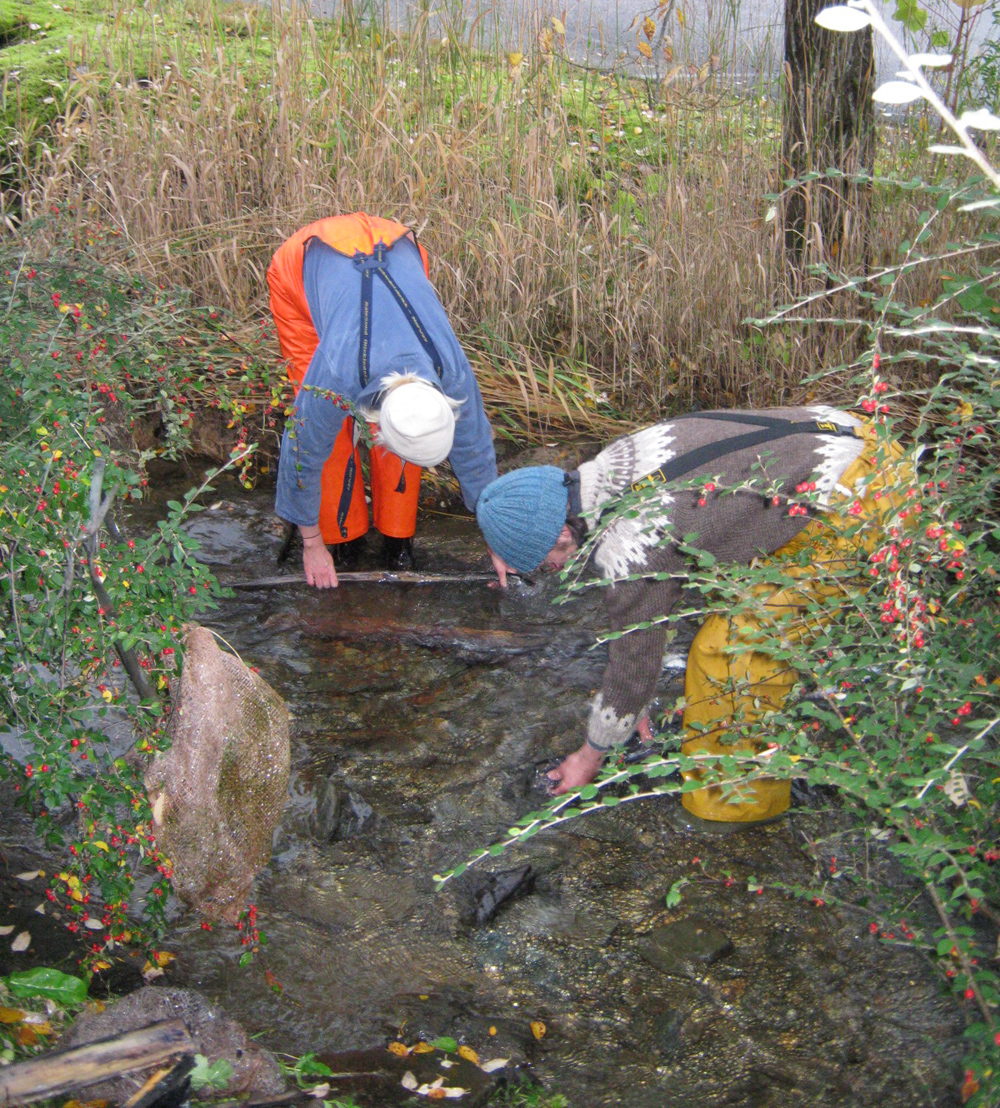
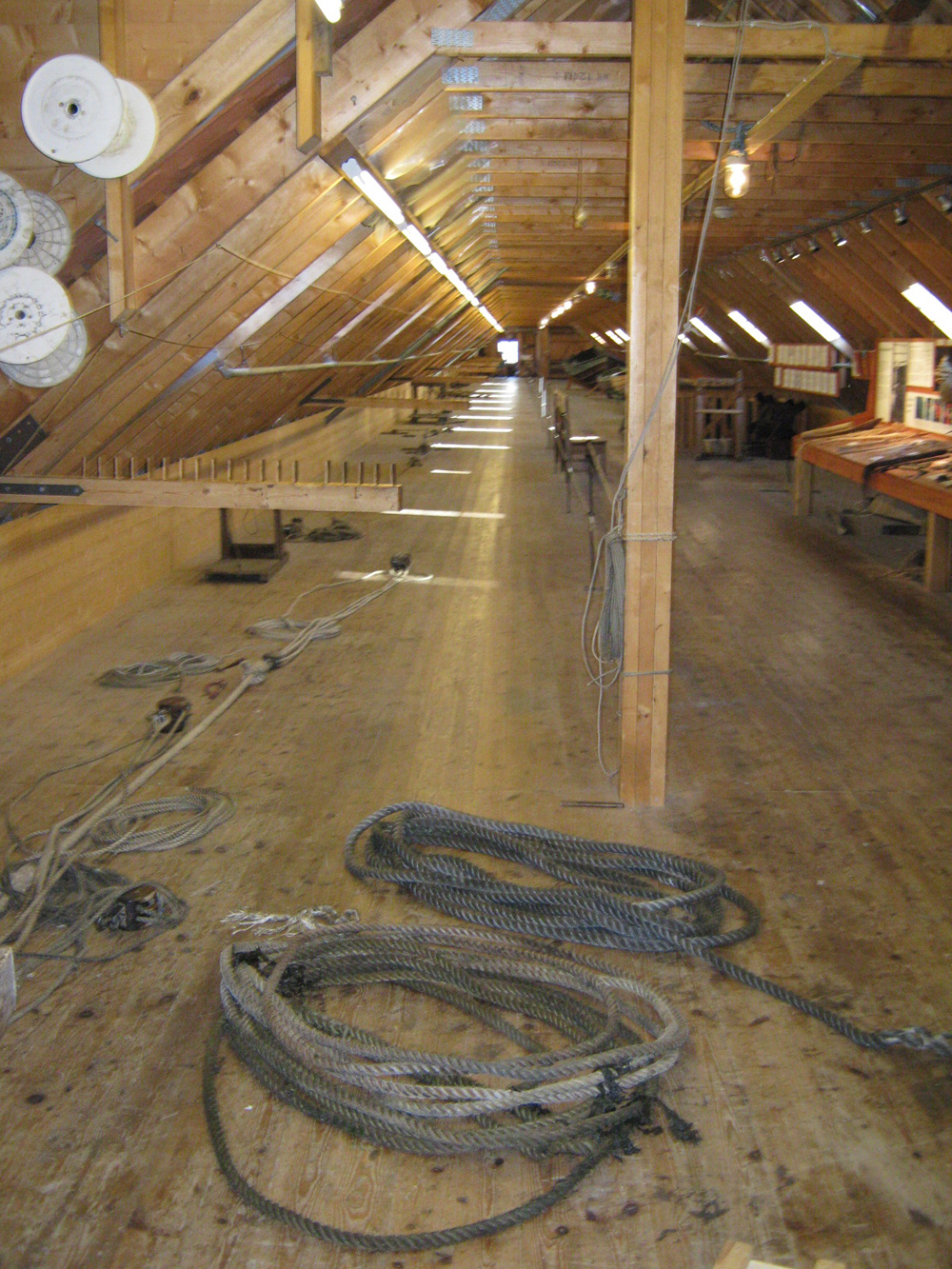
Lime tree bark after four months in the sea.Here’s some photos from my recent trip to the Hardanger Ship Preservation Centre in Norway. The first two days there I was working in the rope walk helping to make rope from lime tree bark. Apparently it’s what the vikings used and it’s a very smelly process to start with. It must be really authentic. Anyway the bark is stripped from the Lime Trees in June when the sap is running and then it is kept in the sea for a few months. It is then taken out and the smell is something woeful first thing in the morning. It’s heavy, slimey and not very pleasant stuff.

Rinsing slime off lime tree bark before splitting fiber layersSo to make it a little more manageable we’re rinsing off most of the slime and gunk before we start peeling the inner layer of the bark off to harvest the fibres that will eventually be turned into rope.

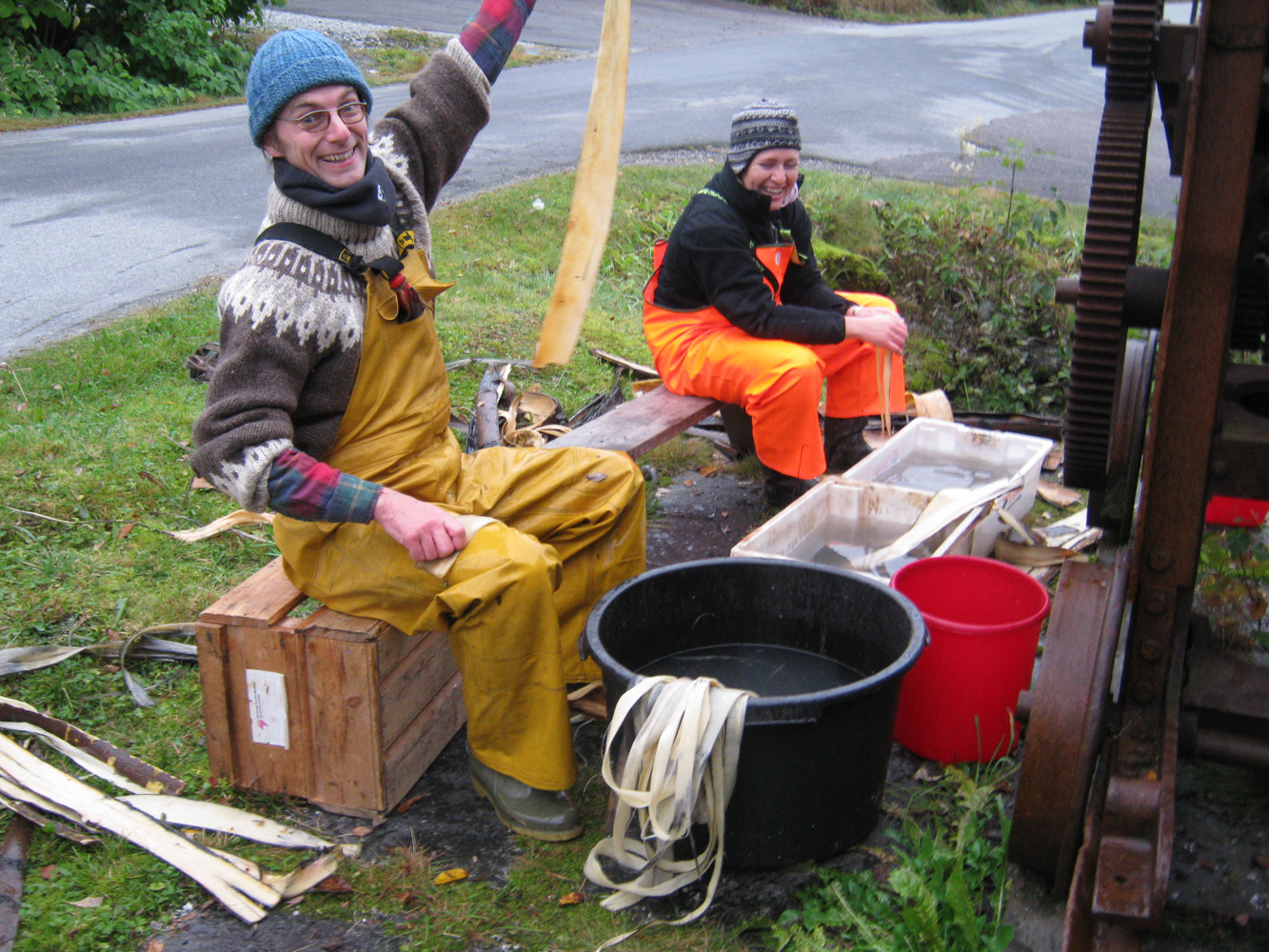
Stripping the inner layers of barkHere I am smiling, you don’t get that very often in a photo. I usually look like a bit of a prat when I try to smile. And this ones no different. I don’t know why I’m smiling it was only about 3 degrees centigrade and that water was chilly. You can see in the photo that I’m holding a piece of the bark that is then hung up to dry like in the photo below. Only the layers of fibers closed to the tree are used to make rope as they are the longest and finest. As one moves through the bark to the outside the layers develope lots of holes and the fibers are shorter and thicker.
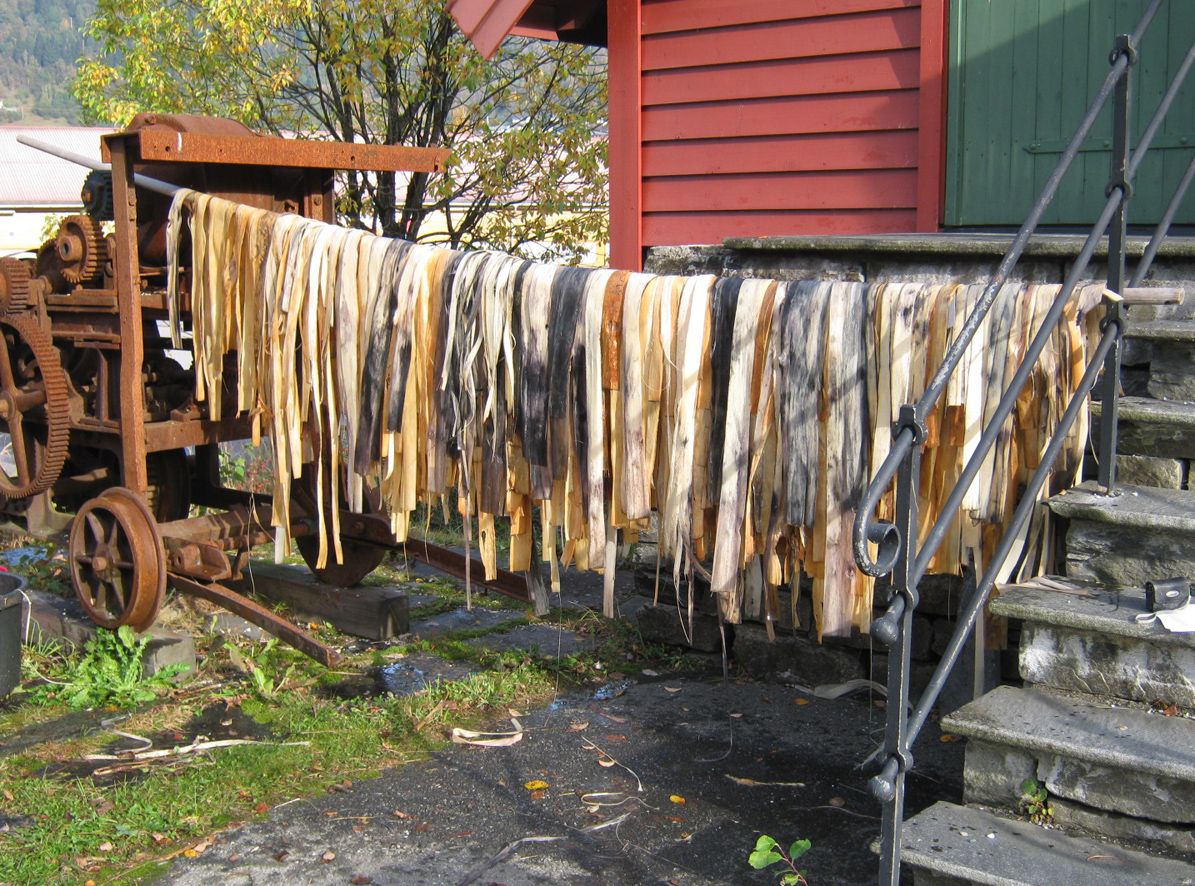
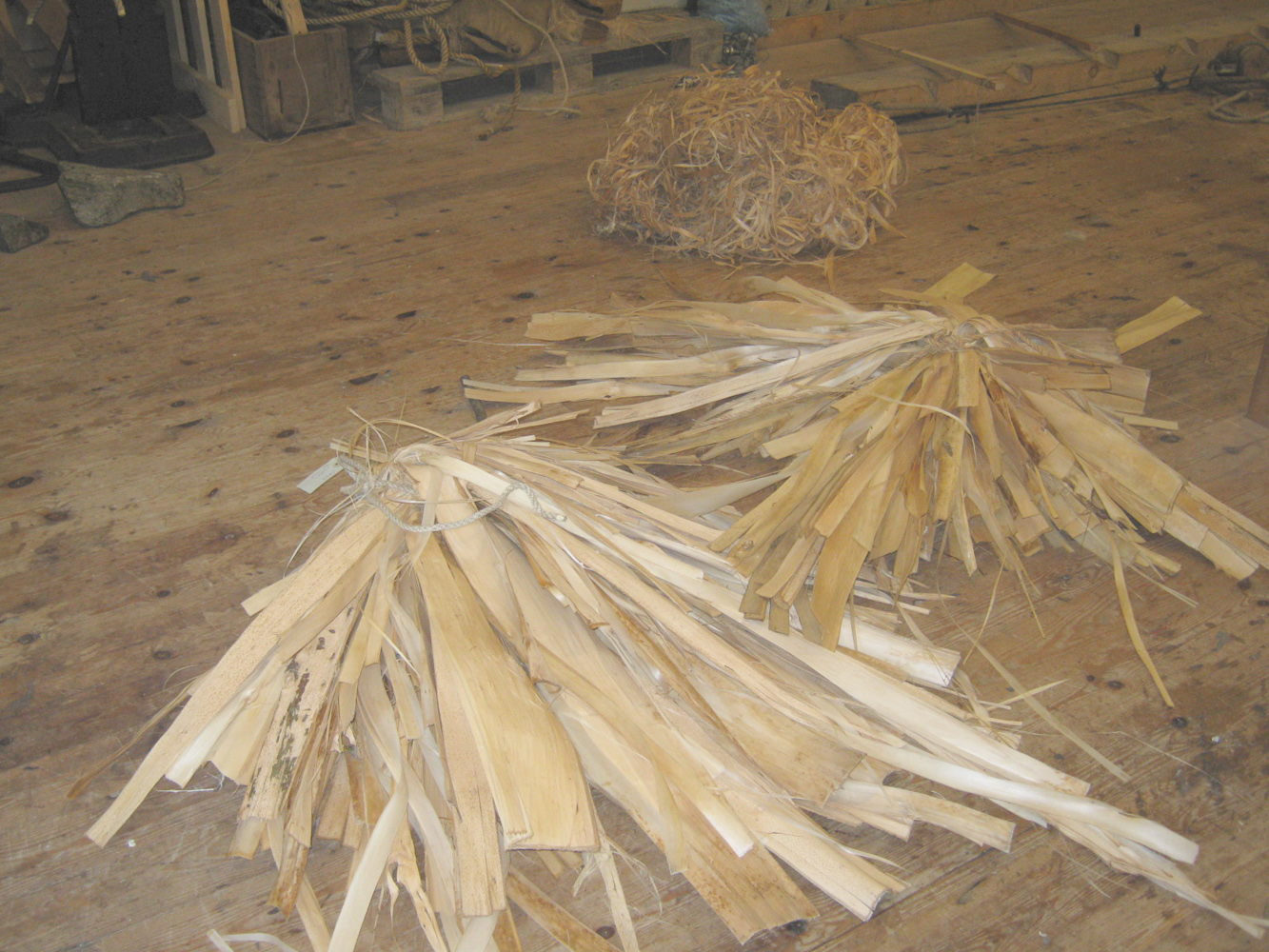
Lime tree bark swatches dryingHere you can see some of the lime tree bark fibres drying. Once the fibre sheets are dry they are again split lengthwise into strips about 5 to 10mm wide before being spun into individual strands which are then spun into rope. We didn’t get that far through the process while I was there. The two ropemakers were busy researching the now lost technique of making rope from seal and walrus skin. They told me if I thought Lime tree bark stank that I should get a noseful of putrid seal skin. Apparently you have to chew it to be able to make the rope. Ugh!

Below is a picture of the rope walk it must be about 150′ long and is where they spin custom hemp ropes for tallships and historical vessels from all over Europe. Many thanks to Anke Eckardt who kindly gave me these photos. She travelled with me to Hardanger and is also a Ballydehob based boat-builder.

Roeboats, Ballydehob, Co. Cork, t:+353 (0)28 38973 m: +353 (0)86 158 69 37 e:roeboats@ymail.com
 

Back to the Future. 21st century Wooden Boats

I came across these lovely drawings of a very nice looking launch while researching the boats of C.G. Petterson. His archive is held by the Swedish National Maritime Museum and they have a wonderful digital archive.1891 2hp petrol 22 foot launch

The boat was designed by Emil Smith in 1891 while it incorporated cutting edge technology it has retained a refined elegance that most modern power boats lack. One hundred and twenty years ago the petrol engine was only starting to become widespread, if you could even say that. A two horsepower engine was as powerful as most got, anything more powerful would have been too heavy for a fine lined boat of 22 feet with a 6 foot beam. I presume that a 2 horse power engine in 1891 had a bit more torque than a modern equivalent and as such could have turned a nice large and efficient propellor. But how about a nice quiet and powerful electric motor with a petrol generator back up? Nothing too complicated in that set up. It wouldn’t cross oceans or break speed records but it would be one very classy and eco-friendly boat. Doubly so if the batteries were recharged from wind or solar. Not impossible if it were only used at the weekend.
22 foot wooden launch from 1891 2 hp 22' long

She certainly would make a very fine dayboat with the wrap around cockpit seating and that beautiful counter stern would make her an ideal canditate for a tender for a larger classic boat. She could ferry the crew out and friends and family could watch the racing from her or go off fishing or beach hopping in 19th century splendour. Low power motor boats are the future and while engines and building materials have changed somewhat in the 120 years since this boat was designed the sea and the forces it exerts have remained the same. Beautiful fine lined and simple boats like this one will be as good in another 120 years as they were when they were first built.

Of course if you would like a silent, capable and good looking boat to travel about in the style and comfort of another era why not give me a call +353 (0)28 38973 or +353(0)86 158 69 37 or or e-mail roeboats@ymail.com to discuss having your perfect boat built.

Roeboats, Ballydehob, Co. Cork, t:+353 (0)28 38973 m: +353 (0)86 158 69 37 e:roeboats@ymail.com

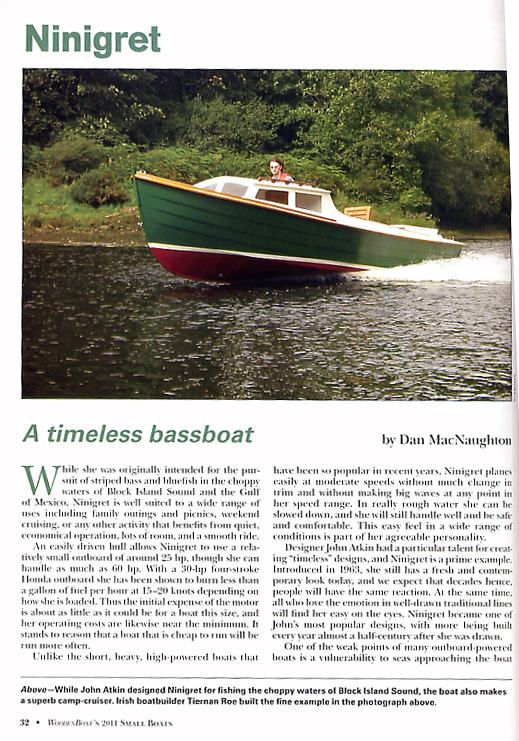
Roeboats feature in Wooden Boat Magazine’s Small Boat Annual.

I’m delighted to be able to say that the Ninigret I built last year has been featured in Woodenboat Magazine’s Small boat Annual. It’s quite a coup as my boat is the only non-American built boat in the Annual. A lot of readers have been kind enough to compliment me on the boat.

Article extract from Woodenboat's Small boats 2011 featuring Roeboats

Here are a few pertinent quotes:

“Ninigret’s hull lines show a boat that is long, lean and light everything that an efficient powerboat should be.”

“Atkin & Company designed over 800 boats, many of them motorboats and many design themes similar to Ninigret were returned to and refined again and again over the course of many years. Perhaps there can be no greater recommendation for this design than to point out that she is the boat John Atkin chose for his own use in his retirement. He and his wife, Pat, enjoyed countless picinics and cruises in Ninigret, in Long Island Sound.”

“… great looking boats that do their jobs really well.”

Seasons greeting to all my readers and if you’re thinking about having a boat built be sure to give me ring +353 (0)86 158 6937 or e-mail roeboats@ymail.com to discuss your boat.

Roeboats, Ballydehob, Co. Cork, t:+353 (0)28 38973 m: +353 (0)86 158 69 37 e:roeboats@ymail.com