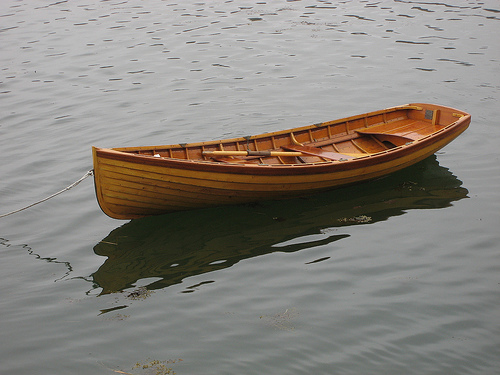
Photo by rick rowland via Flickr Creative Commons
Where lightweight and strength are needed wood is the best material to use.
Wood is stronger than than steel, most fiberglass and aluminium pound for pound.
Wood is stiffer than all fiberglass, kevlar and steel.
Wood absorbs vibrations and this includes sound, so wooden boats are quieter.
Wood does not fatigue with repeated loading,
Wood is a renewable resource and the growing of wood removes carbon dioxide from the atmosphere.
Wood is eco friendly in that it can be recycled, fiberglass cannot.
Wood looks good.
Wood allows economical, in both materials and cost, custom production of boats.
Wooden boats require similar maintenance to fiberglass boats. Gel coat is not the wonder material it was thought to be
So why are most boats for sale today made of fiberglass?
There is one reason most boats are built from fiberglass; that is cheap labour.
It requires skilled craftspeople to build a wooden boat, whereas semi-skilled and unskilled operatives with proper supervision can manufacture a fiberglass boat.
Fiberglass is not renewable and non-recyclable,
Fiberglass requires similar maintenance to a wooden boat. Gel coat is not the wonder material it was thought to be.
Update: 2-May-2010
I came across this article by Lawence W. Cheek in the Seattle Times today and he says exactly what I want to, but better.
“We willingly pour the considerable labor and love into building, maintaining and restoring wooden boats because they lead us to participating in something greater than ourselves. I have nothing against fiberglass, but a boat made of synthetic material simply reflects human culture back at us. It is purely a product of technology. A wooden boat is a partnership. It’s not literally a living thing, not quite, but it evinces respect for the life that exists outside the clubby circle of human intelligence.”
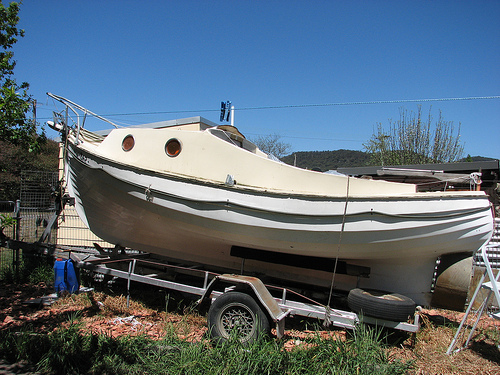
Photo by Botheredbybees via Flickr Creative Commons
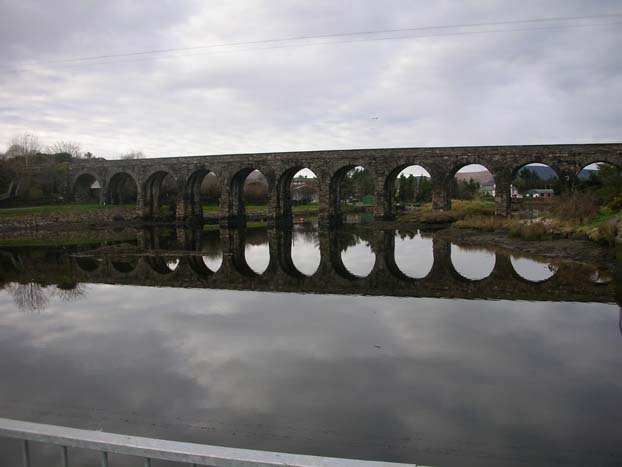
 Looking north
 Looking east
 Looking West
 The channel through Ballydehob bay a to Roaringwater bay is marked by bouys and is fairly straight forward. The great thing about Ballydehob is that diesel and petrol are available in the village; this is no longer so in neighboring Schull. Also it is much quieter and picturesque with better shelter than its more famous neighbor. It is restricted in draft and only accessible to smaller craft which is great.
 All of the decking had delaminated after being left out uncovered for a good few years and the boat needed a full fitting out.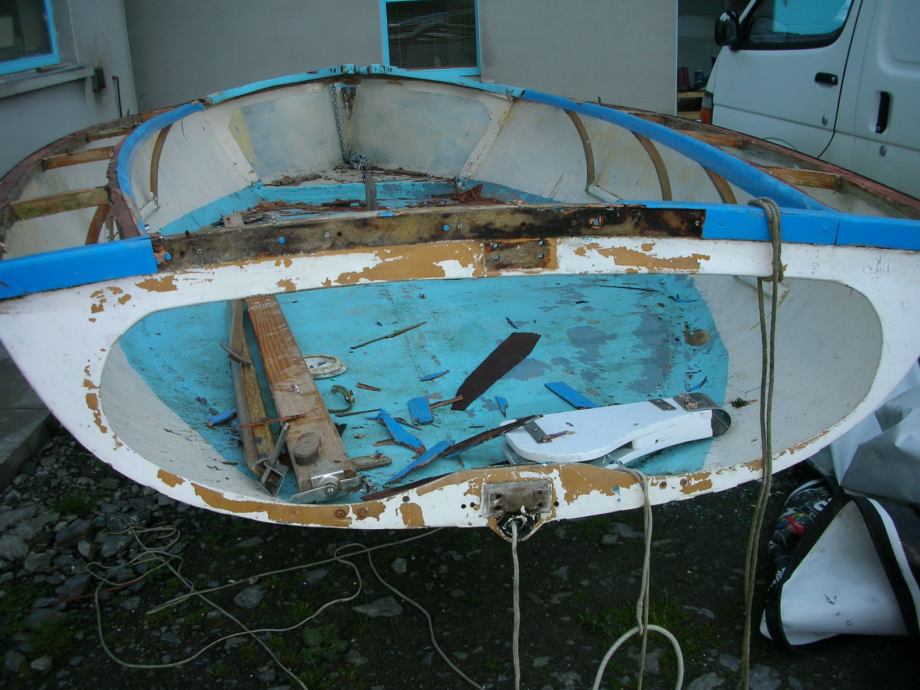
 I redecked the boat, recyled some of the seats from the wayfarer and built new ones. They gave me some very funny looks when I bought a plank of iroko that looked like a boomerang but it was perfect for the rubrail at the gunwale. I was able to use the wayfarer rig, which was a little smaller than the National 18; because I would be single handing a lot. Repainted and varnished the whole lot. I filled in the transom hole as I wanted to keep my feet dry. I’ve been using the boat for 3 summers now and it has performed much better than the wyfarer the extra length and beam make it a lot sturdier and roomy. The design is a 1968 Ian Proctor design that replaced the sleek 1930’s

 Wooden boat builder, Boat for sale, power, sail, classic, modern, custom, yachts, dinghy, sailboat, motorboat, powerboat, commuter, sea, lake, river, Ireland, Cork, Europe Roeboats